
Keep Water Away From the Foundation
Tampa Bay sits on a high water table, and a lot of our homes are on low, flat lots where water has nowhere to go. When it cannot drain away, it sits in the soil against the foundation and slowly works its way in. A foundation drain pulls that water off before it reaches the wall, and a waterproofing coating seals the wall as a second line of defense.
This is water management, not foundation repair. We are not the cheapest call you can make, and the homeowners who hire us are usually done watching water pool against the house every summer and wondering what it is doing to the home they cannot see.
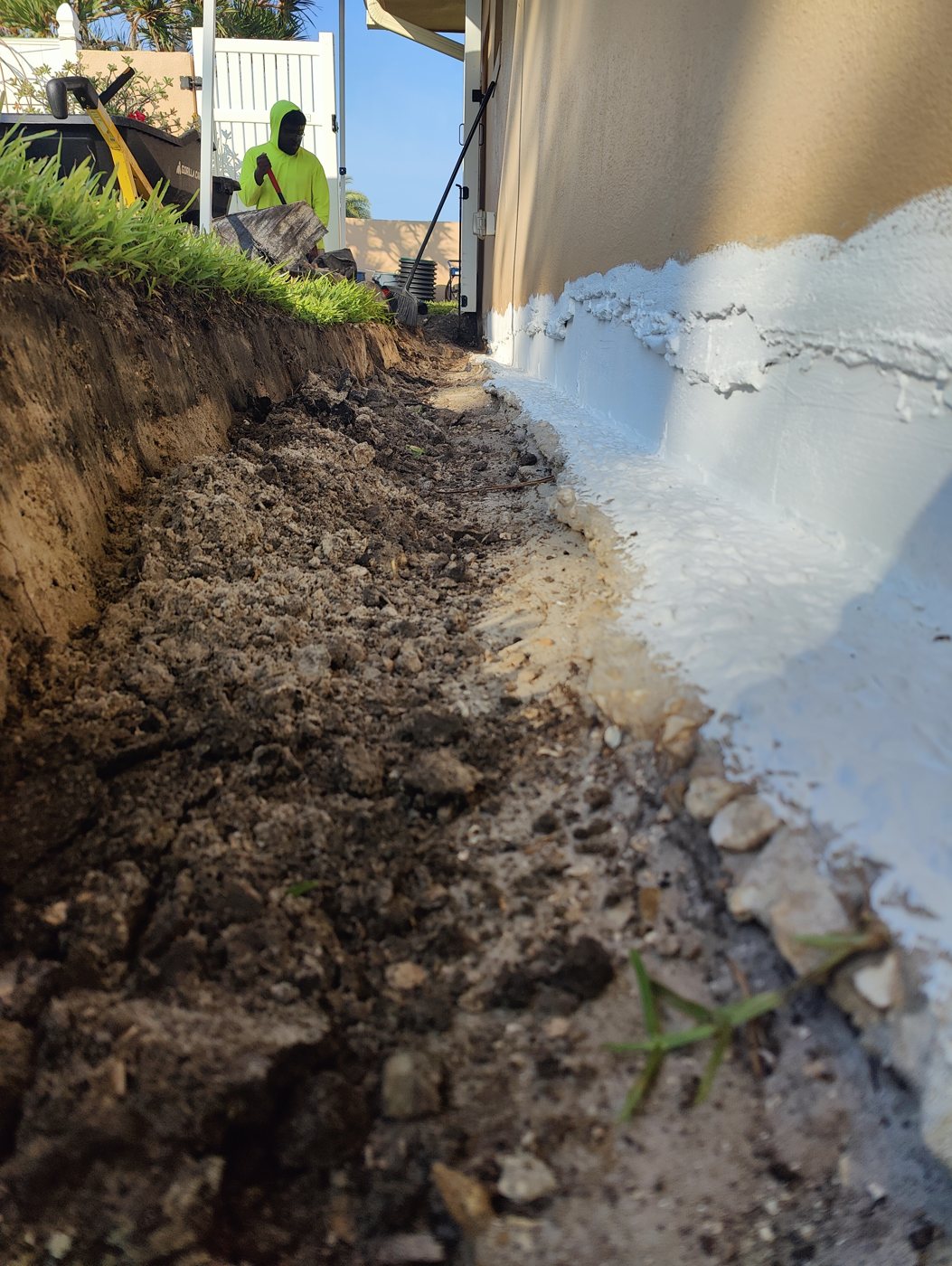
When Water Cannot Get Away, It Goes Into the Foundation
Much of Tampa Bay is flat, sandy, and low to the water table. After a hard rain the ground around the house can stay soaked for days. That saturated soil holds water right up against the base of the foundation, and given enough time it works its way through a block wall, a slab edge, or a small crack.
It is quiet damage. There is no flood, just months and years of damp soil sitting against the home. The signs come on slowly: a musty smell, a chalky white film on a block wall, soft spots low on an interior wall, a floor near an outside wall that never quite feels dry. The most common source we find is the simplest one, downspouts that empty right at the base of the wall and a yard that slopes toward the house instead of away.
Signs Water Is Working at Your Foundation
- Water pools or stands against the foundation after rain
- The soil along the house stays soggy long after a storm
- Downspouts empty right at the base of the wall
- The ground slopes toward the house, not away from it
- A chalky white film on a block or stem wall
- A musty smell or damp, stained spots low on an inside wall
- Hairline cracks that weep during heavy rain
- A low or flat lot that holds water close to the home
Two Layers That Keep the Foundation Dry
A Trufam foundation system does two things at once. It collects the water in the soil and carries it off before it can load against the wall, and it seals the wall itself so anything that does reach it is turned away. One layer protects the other.
A perimeter drain at the footing
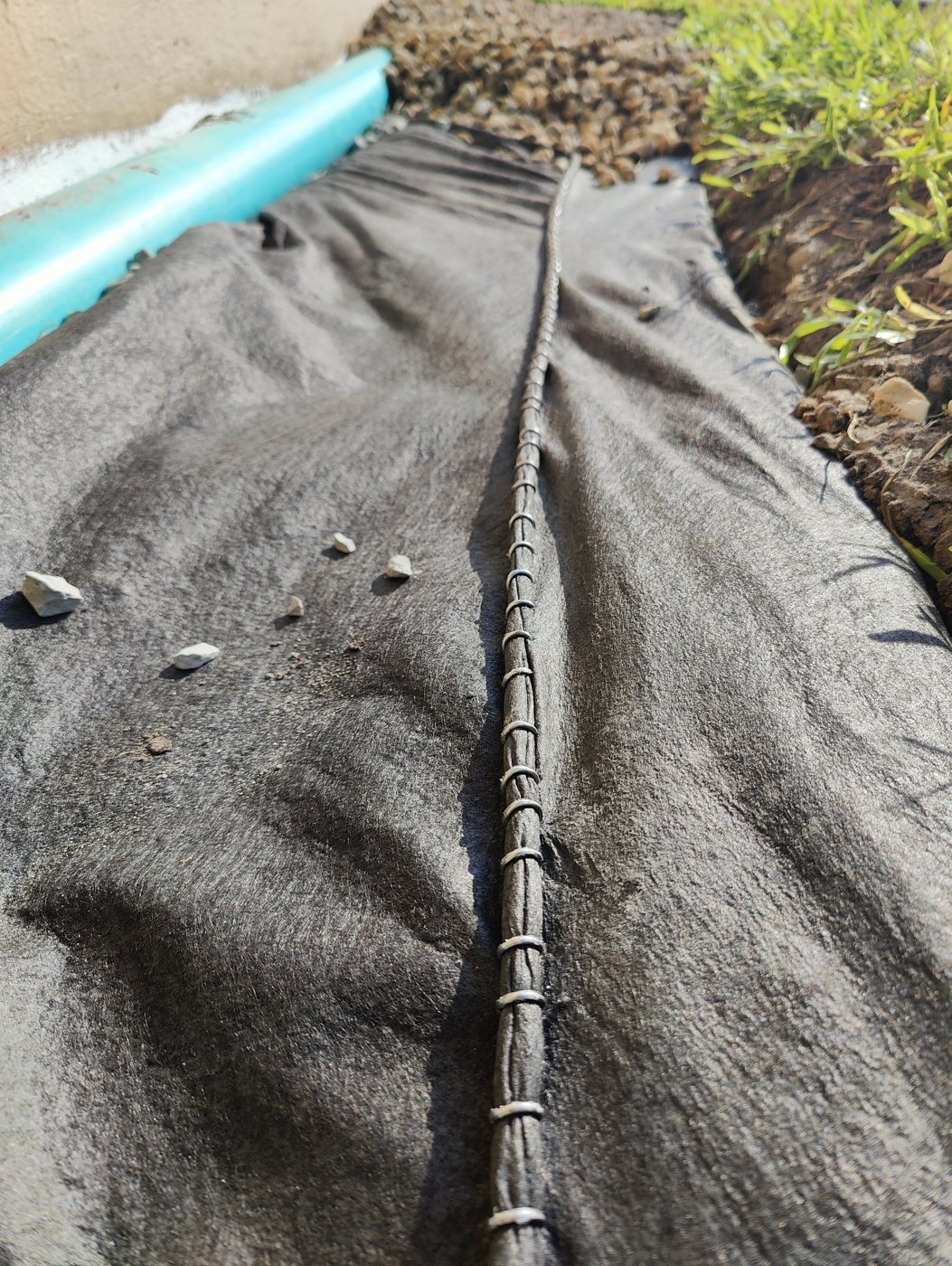
We set a perforated pipe in DOT-grade drainage fabric and clean #57 granite, run along the base of the foundation. It gives the water in the soil an easy path to follow, collecting it and carrying it off before it can build up against the wall or wick up under the slab.
A waterproof coating on the wall
The foundation wall is cleaned and sealed with a thick rubberized waterproofing membrane, a coating that bonds to the surface. It is the second line of defense, so if any water does reach the wall it is turned away instead of soaking through the block or the slab edge.
Carried to a real discharge
Solid SDR-35 pipe takes the collected water to daylight or a high-flow outlet basin, well away from the home. We pull the downspouts off the foundation and tie them into the same underground drainage system, so roof water never lands against the wall again.
Commercial-Grade Materials, Built to Be Serviceable
A foundation drain is buried for the life of the home, so the materials matter more here than almost anywhere. We use the same standards we hold on every drainage system: real drainage fabric, clean stone, solid pipe, and a downspout line tied right into the system so the roof water leaves with everything else.
Cheaper crews backfill with the same dirt they dug out, skip the fabric, or run thin pipe in bare ground. That work disappears underground and fails quietly. We build the drain to last as long as the foundation it protects.
- Perforated collection pipe set true along the footing, no bellies
- Double-punch DOT-grade drainage fabric, rated about 50 years in the ground
- Clean #57 granite, not limestone that breaks down over time
- Solid SDR-35 pipe carrying the water to a real discharge or sump system
- Downspout lines tied in so roof water leaves the foundation
- Excavated dirt hauled away, never packed back over the drain
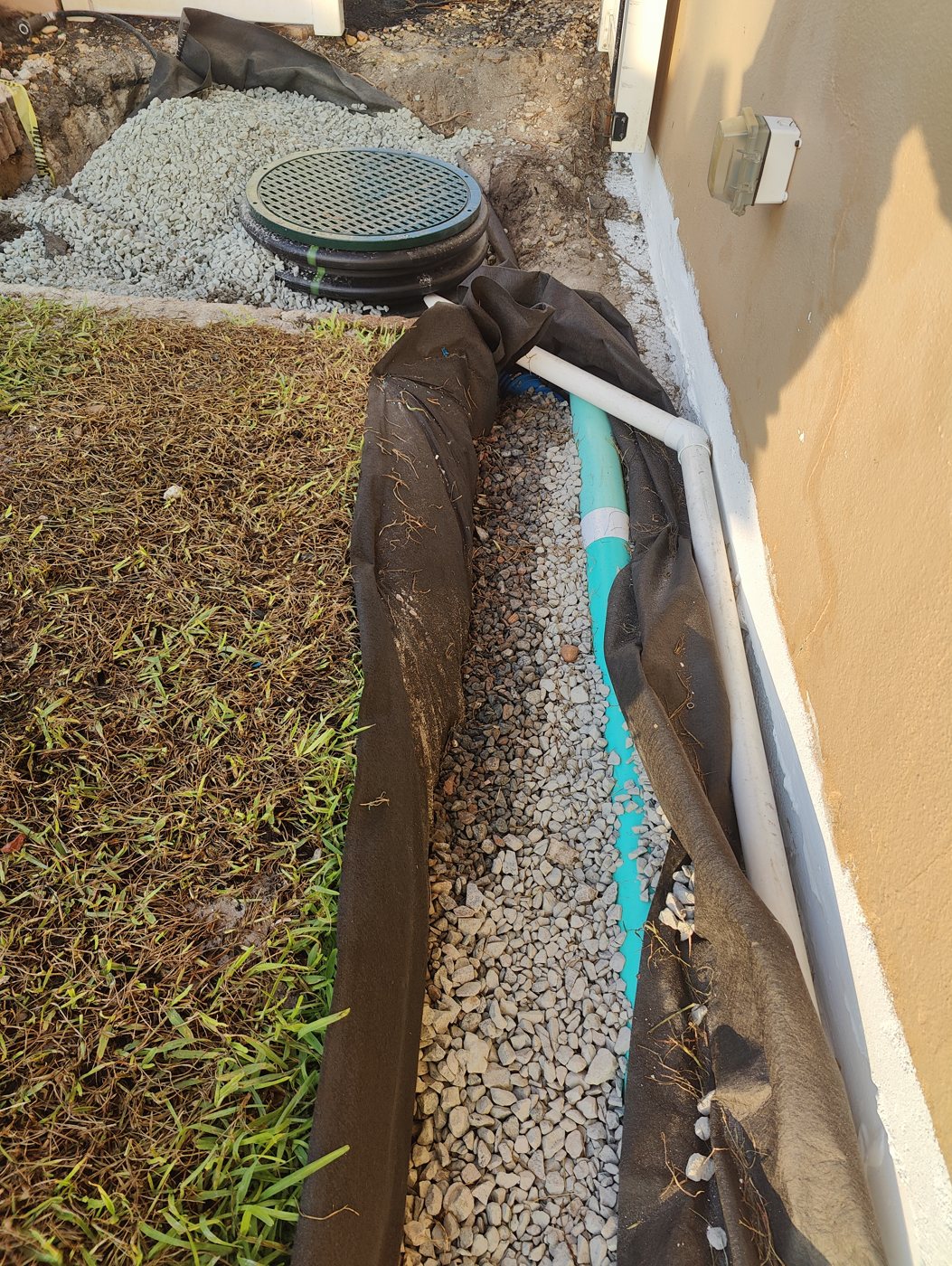
Waterproofing Is the Second Line of Defense
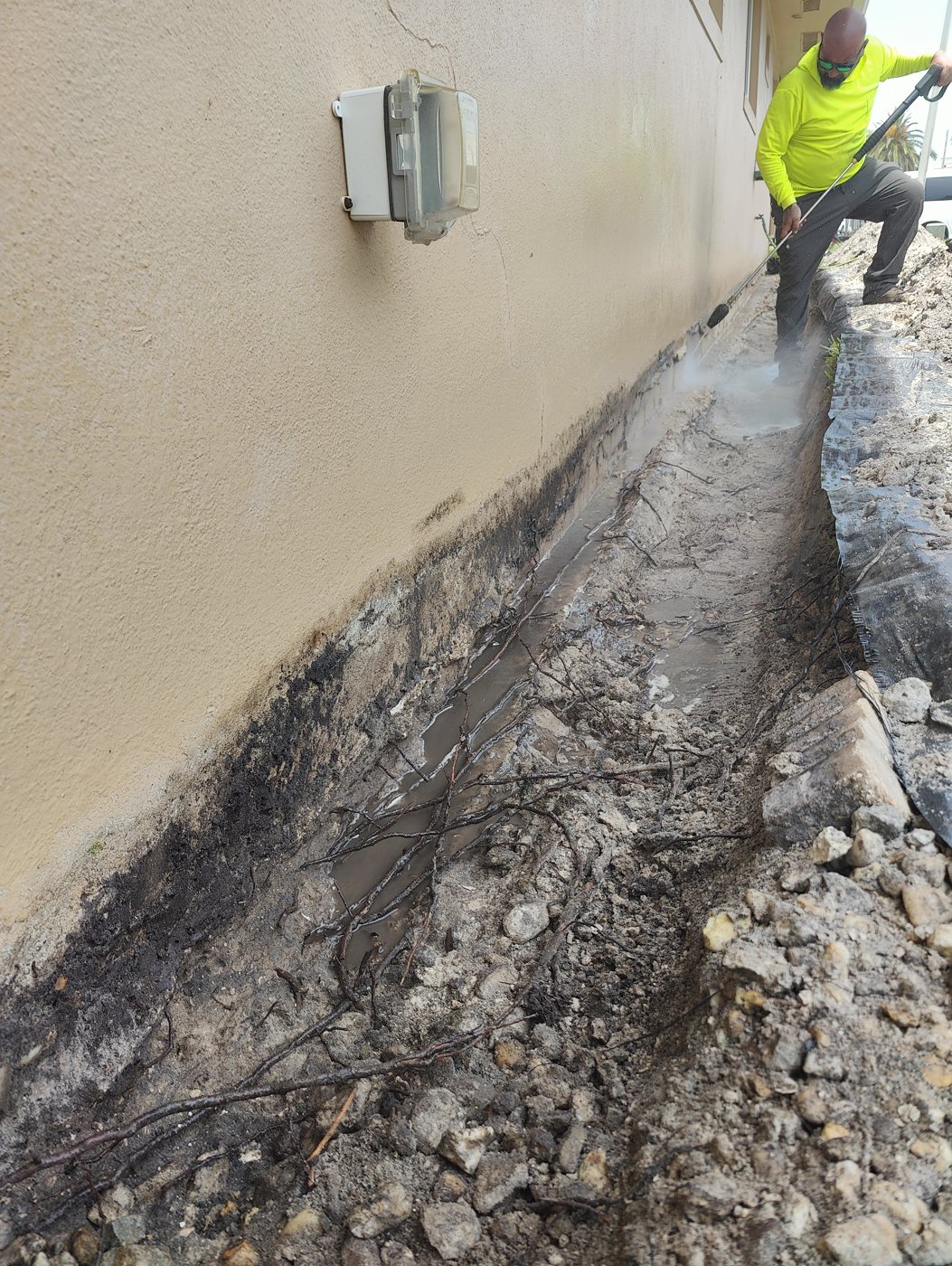
The drain handles the water in the soil. The coating handles the wall. While the foundation is open during the work, we pressure wash it down to a sound, clean surface and seal it with a thick rubberized waterproofing membrane that bonds to the block or concrete. It fills the small pores and hairline gaps where water likes to wick through, so the wall stays dry from the outside in.
Drainage and waterproofing work best together. A coating on its own still has saturated soil pressing against it, and a drain on its own leaves the wall unsealed. Doing both is how you actually keep the water out and keep it out for good.
Cheap Drains and the Wrong Materials
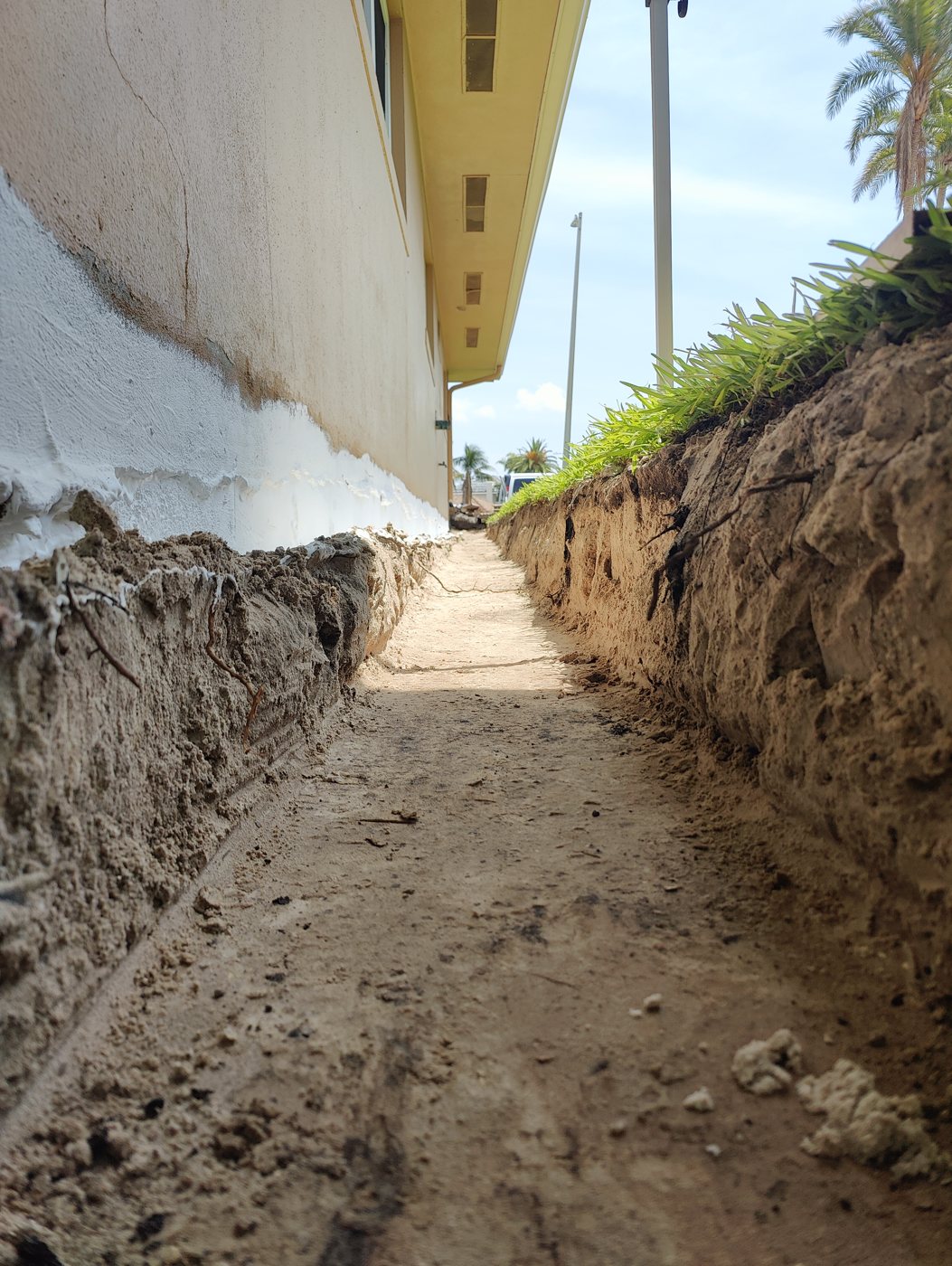
Most of the foundation drains we get called out to replace were not unlucky. They were a cheap pipe buried in bare dirt, no fabric, no stone, and no thought to the wall behind them. Here is what we dig up, and why the materials and the method are the whole job.
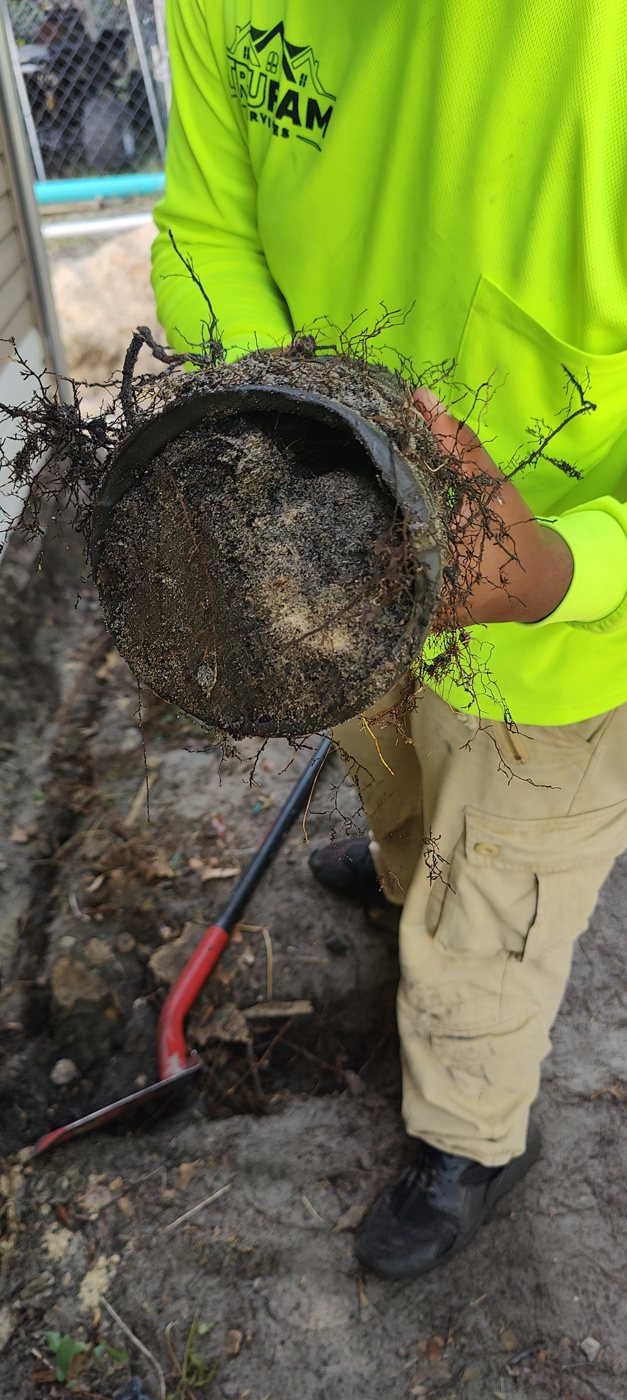
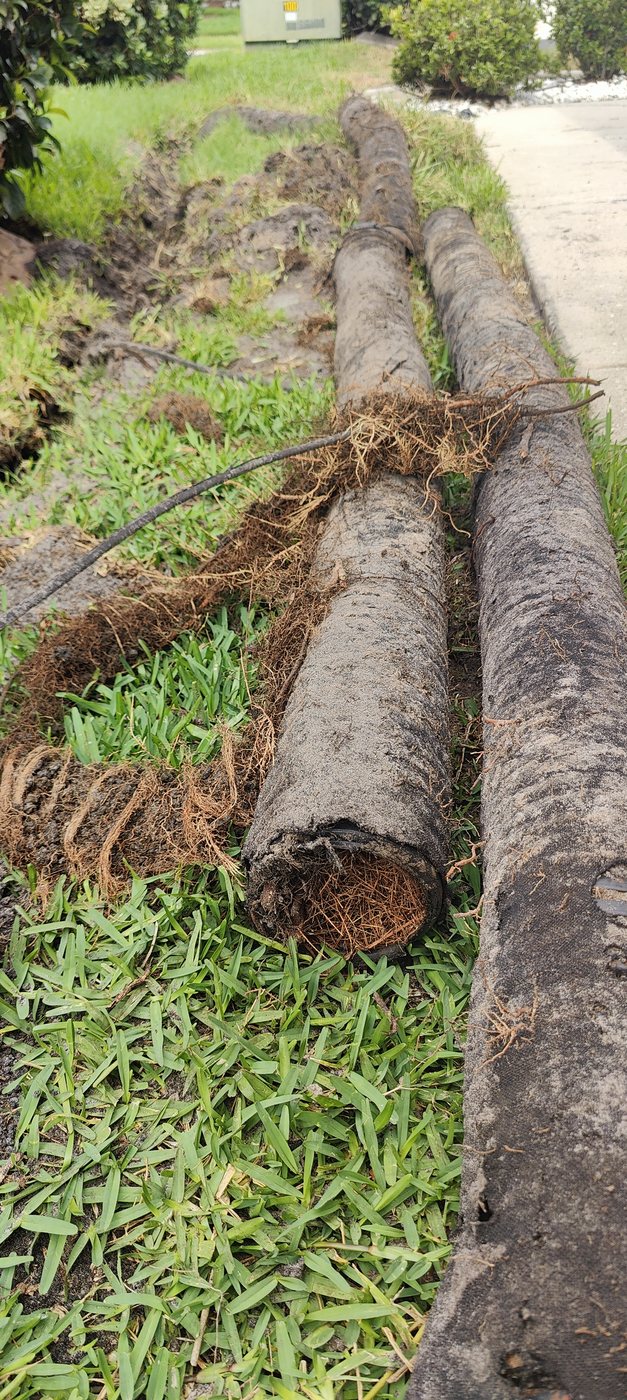
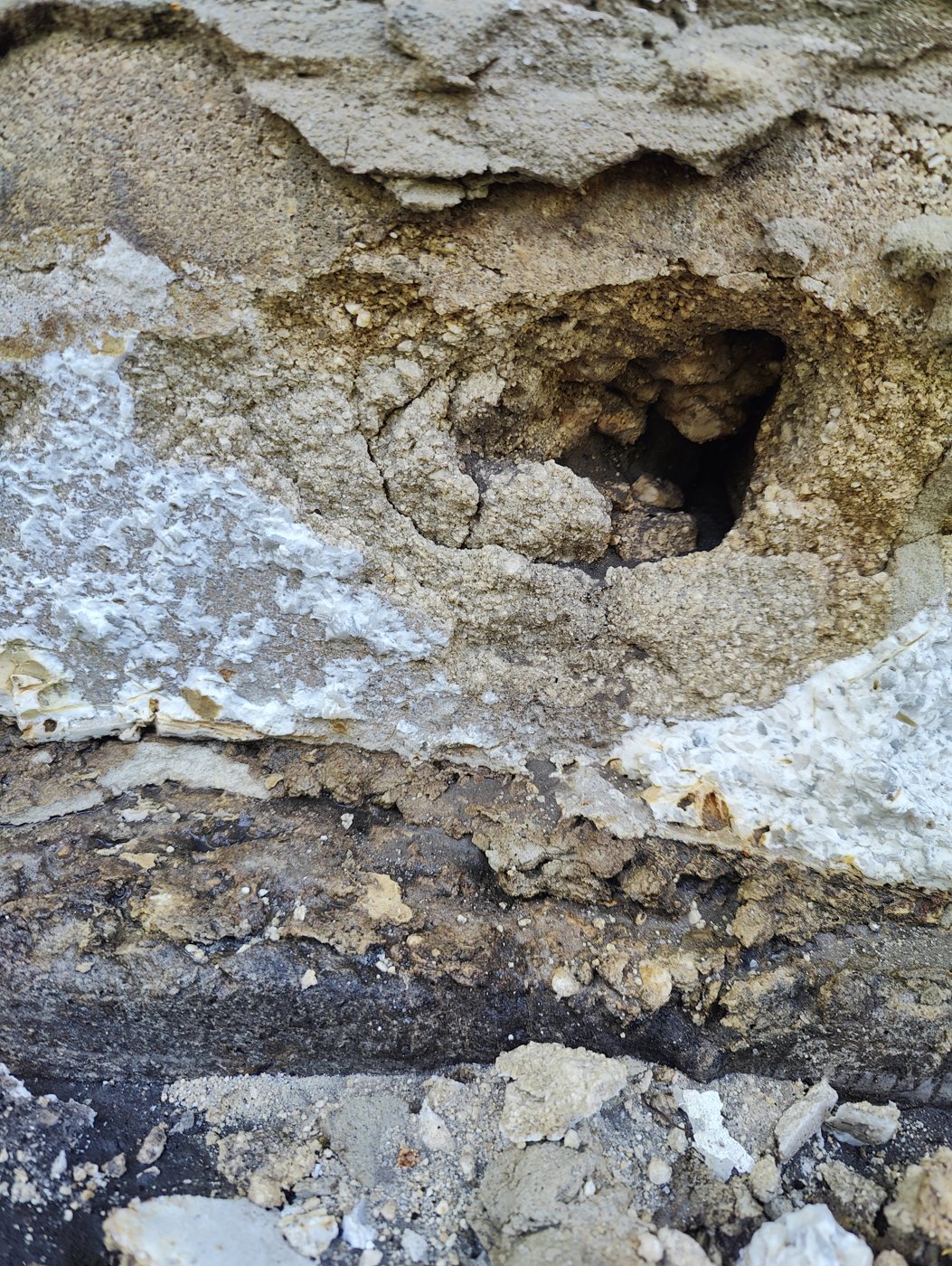
When we open up a wall like this, the water problem the owner has been fighting finally makes sense. Putting it right is a good part of what we get hired to do.
Water Management, Not Foundation Repair
We want to be clear about what this is. Trufam manages the water around your foundation so it never gets the chance to do damage. We are not a structural repair company, and if a home truly needs underpinning, that is a different trade. What we do is remove the cause, the water sitting against the home, which is what the great majority of foundation moisture problems in Tampa Bay come down to.
Because we build drainage for a living, we look at the whole picture. The perimeter drain, the wall coating, where the downspouts go, the slope of the yard, and where the water finally lets out. On most homes we tie it together with the gutters and downspouts and the property's underground drainage, and a French drain where a wet yard is feeding the problem.
That is also why our number is not the cheapest in town. You are paying to fix the cause once, with materials built to outlast the work, and to protect the single largest investment most people own, their home.
What You Get With Trufam
- A perimeter drain that carries water off before it loads the wall
- A rubberized waterproofing coating sealing the foundation
- Downspouts pulled off the foundation and tied away
- Commercial-grade fabric, clean #57 granite, solid SDR-35 pipe
- A clear, honest plan and a set price before any digging starts
- One crew that handles the drainage, the coating, and the discharge
What Shapes the Scope and the Price
No two foundations are the same job. The price follows how much of the perimeter needs the drain, how deep we have to go, how easy the wall is to reach, and how far the water has to travel to a safe discharge. We measure the home, walk the plan with you, and set the number before any work begins, so there are no surprises on the day.
Doing it right costs more on day one than a quick regrade or a tube of crack filler. It costs far less than living with water against the home, a coating that was never paired with a drain, or paying a structural contractor years from now for damage that started as a drainage problem.
- How much of the foundation perimeter needs the drain
- Trench depth and how easy the foundation is to reach
- Whether the wall gets the waterproofing coating too
- Soil conditions and how high the water table sits
- How far the water must travel to daylight or an outlet basin
- Tying in downspouts, a sump system, or an existing drain
Why Foundations Stay Wet in Tampa Bay
Tampa Bay is flat, sandy, and close to the water table, and the summer rains come hard and back to back. On a low lot the soil around the home can stay saturated for days, and that standing water has to go somewhere. Without a drain to carry it off, it sits against the foundation and works at it the whole time. A foundation drain gives that water a way out, so the wall the home stands on stays dry.
We install foundation drains and waterproofing across Palm Harbor, Clearwater, Dunedin, Safety Harbor, St. Petersburg, Seminole, Tampa, Fish Hawk, Bradenton, Lakewood Ranch, Sarasota, and the surrounding communities. See every area we cover on our service areas page.
Stop Water Before It Reaches the Wall
If water is pooling against your home or you can see the early signs, the time to handle it is before it gets into the foundation. Tell us what you are seeing and we will walk the property, find where the water is coming from, and set a clear plan and price.
Request an Estimate