
French Drains for Soggy Yards and Standing Water
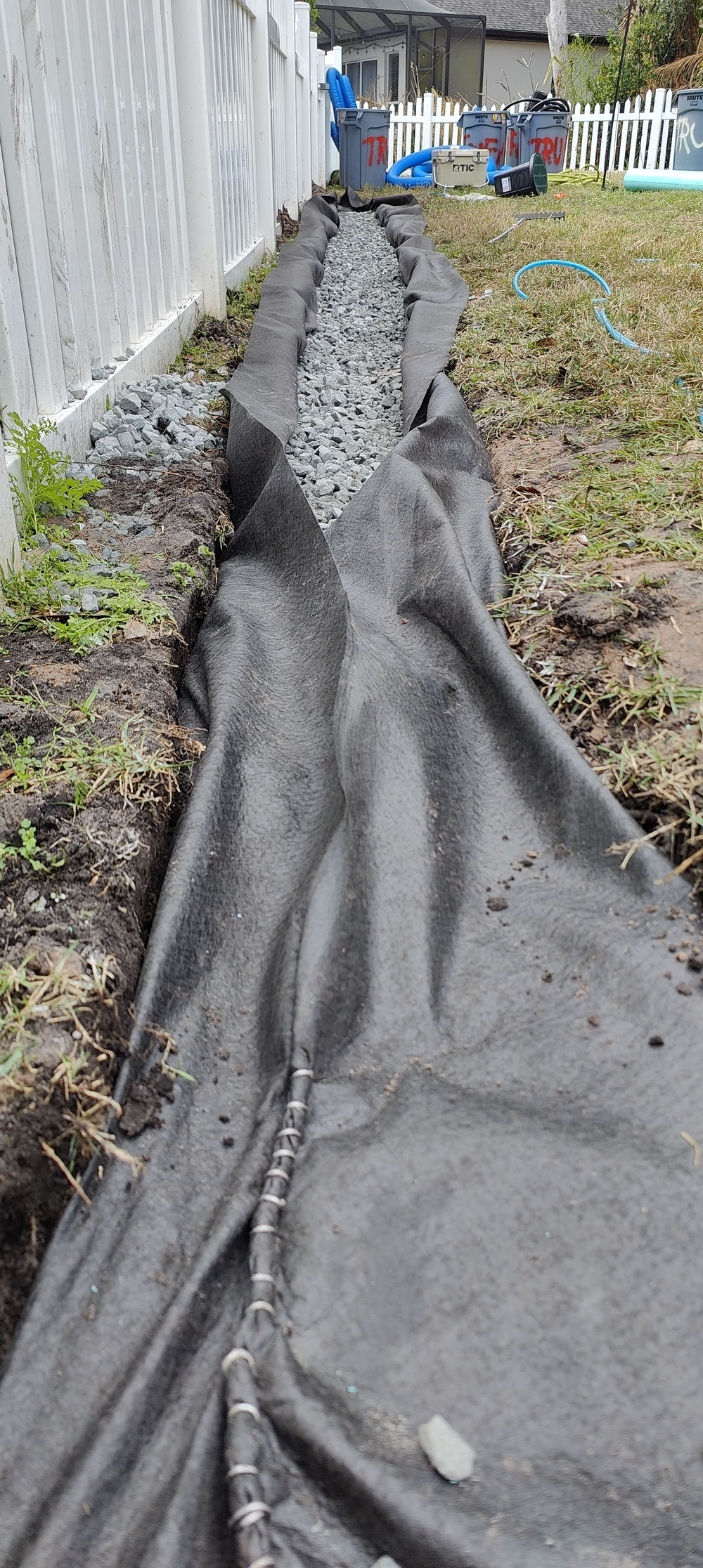
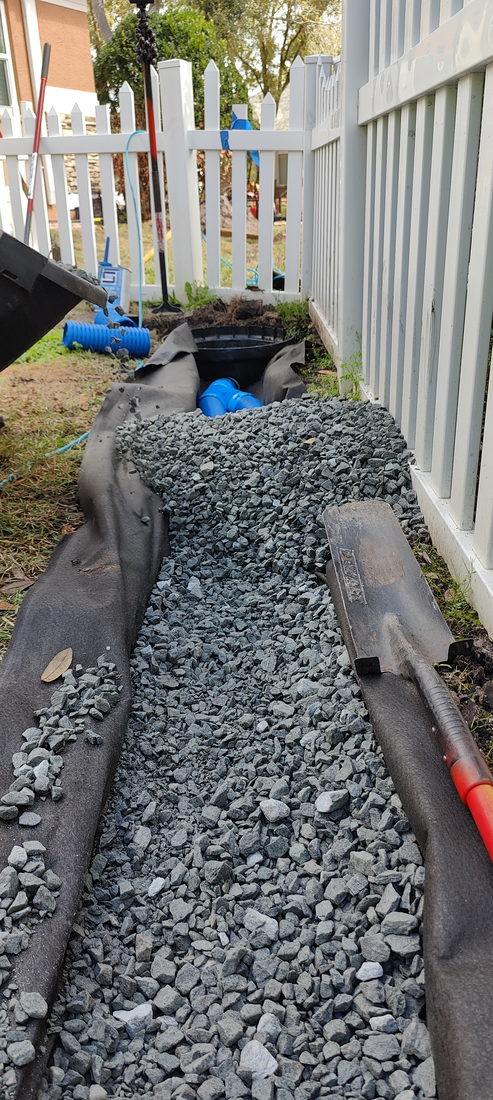
When the ground around your home stays wet long after the rain stops, the water has soaked in and has nowhere to go. A French drain gives it a way out. We dig a trench, wrap it in heavy drainage fabric, fill it with clean granite stone, and run perforated pipe along the bottom. Water seeps into the stone, into the pipe, and gets carried to a safe spot away from your home.
Trufam builds a French drain with commercial-grade materials and real access to keep it working for years. We are not the cheapest drainage company in Tampa Bay, and most homeowners who call us are done paying for quick fixes that did not last.
Ground That Stays Wet After the Rain
Tampa Bay sits low and flat, with a high water table and heavy summer rain. When water soaks into a yard faster than the ground can move it, it has nowhere to drain. The lawn stays soggy for days, low spots turn into ponds, and the wet ground creeps toward the house.
A French drain pulls that trapped water out. The clean stone and perforated pipe give the water an easy path, and a sealed outlet line carries it to a controlled discharge away from the home.
Built right, it disappears under the lawn and quietly keeps the ground dry. The part that decides whether it lasts is below the surface: the fabric, the stone, the pipe, and whether the water has a real place to go.
When You Need a French Drain
- A lawn that stays soggy days after a storm
- Standing water that will not soak in
- A low spot that turns into a pond
- Mushy, wet ground along the foundation
- Water sitting against a retaining wall
- Mosquitoes breeding in wet ground
- Grass dying in a constantly wet area
- A neighbor's yard draining onto yours
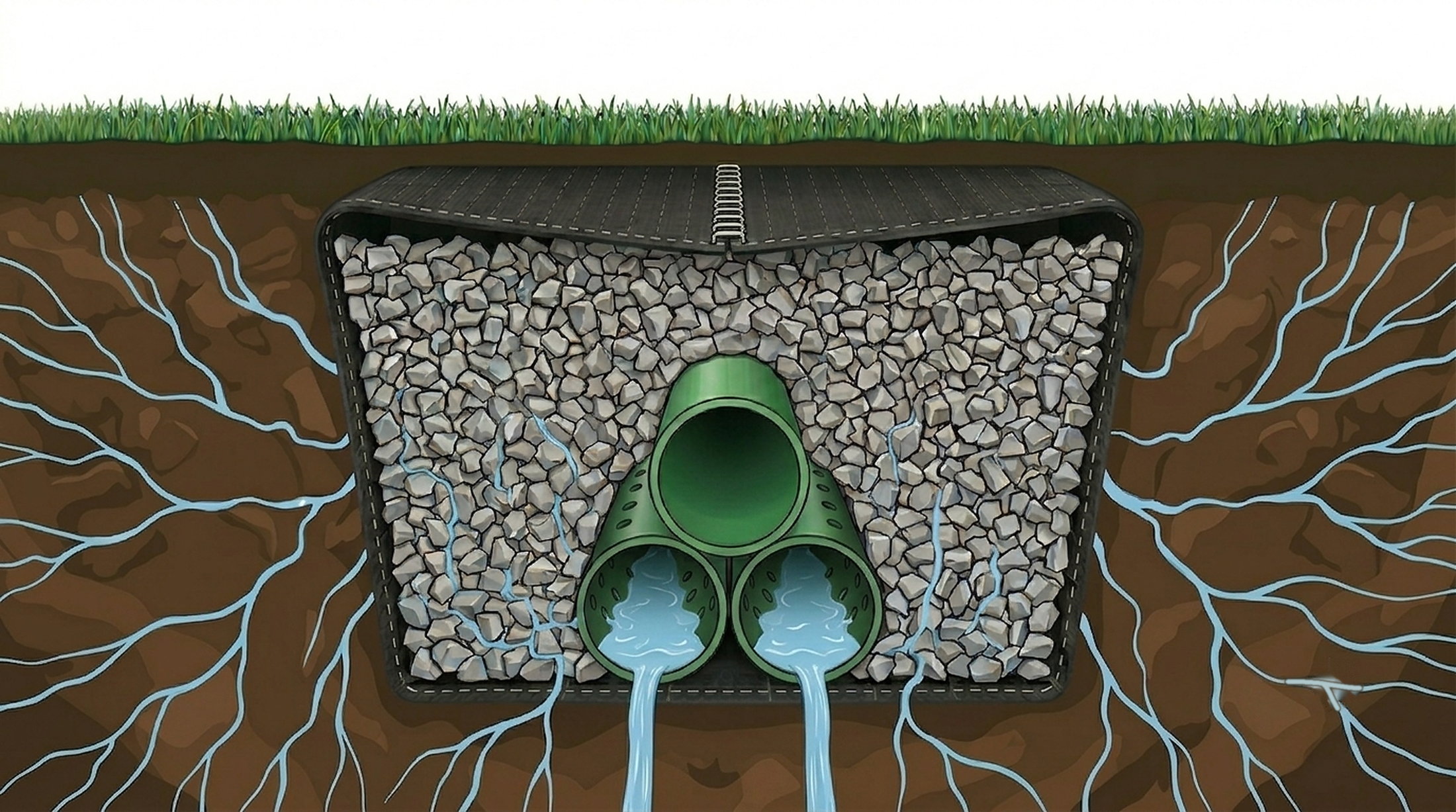
A French Drain Is Built in Layers
What you see on top is a strip of sod or stone. What makes it work is everything under it. Here is a cross-section of a Trufam French drain, from the finished surface down to the pipe.
 1
2
3
4
5
1
2
3
4
5
A French Drain Ties Into the Whole System
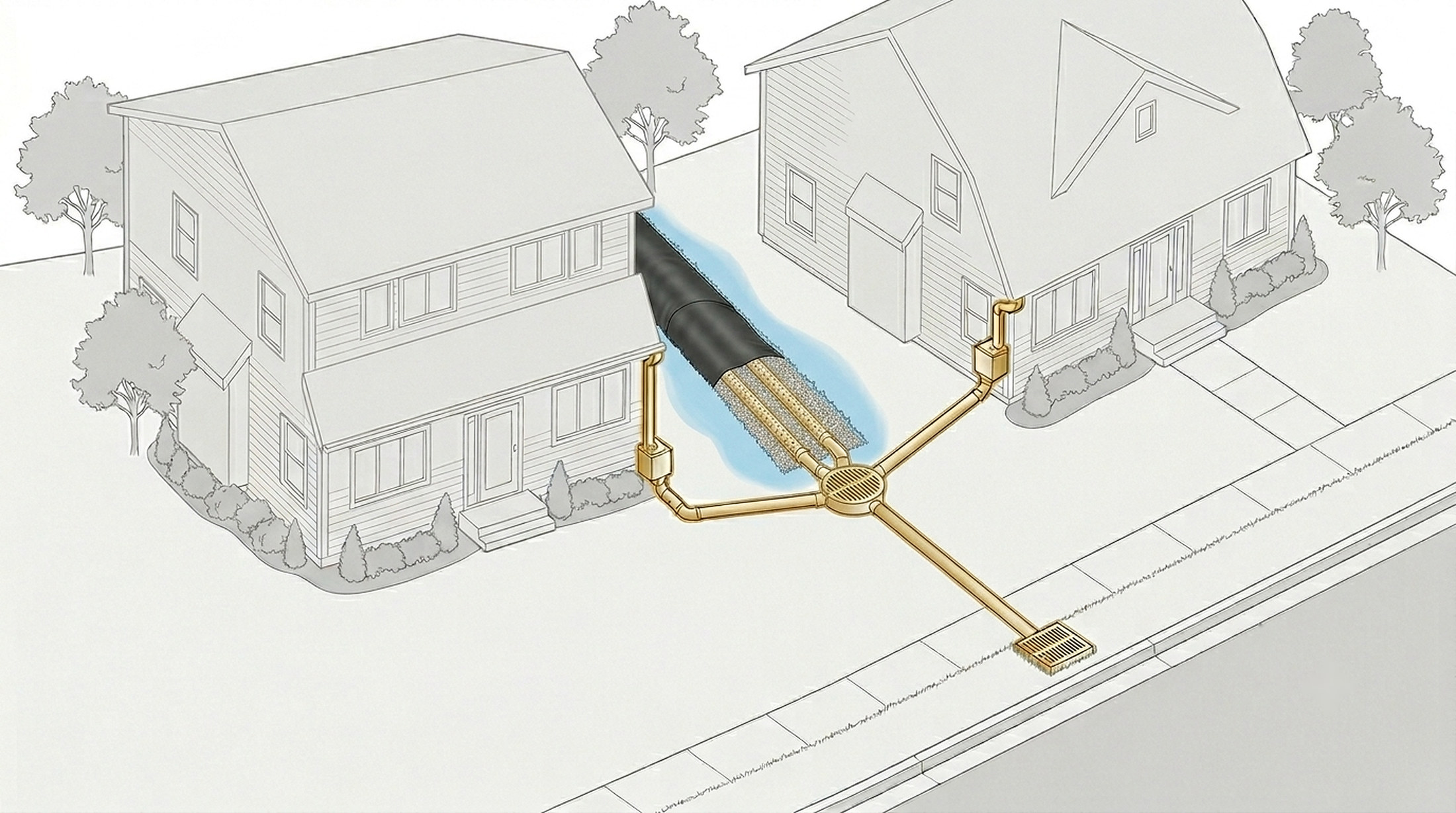
On a lot of Tampa Bay properties the French drain runs in the side yard between two homes, then ties into a collection point along with the roof downspouts. From there a single main line carries everything out to the front, away from both houses. Here is the path on a typical lot.
 1
2
3
4
5
6
7
1
2
3
4
5
6
7
Built to Drain Dry, Year After Year
A French drain is more than a pipe in a ditch full of rock. The fabric, the stone, the two-pipe layout, and the discharge are what keep it pulling water years after the install.
Read where the water sits
Most standing-water problems are slope problems. Before any digging, we read the grade with a level, find the wet zones, and lay out the trench where it will actually intercept the water and carry it somewhere it can go.
Dig the trench and haul the dirt away
We dig to the depth the water needs and haul the excavated soil off the property. It never gets packed back into the trench, because dirt in the stone is exactly what clogs a French drain and chokes off the flow.
Line it with real drainage fabric
DOT-grade double-punch geotextile lines the walls and the bottom, then folds over the top. It lets water through while keeping soil and roots out. We do not use weed barrier, which seals up and stops draining.
Set two pipes in clean granite
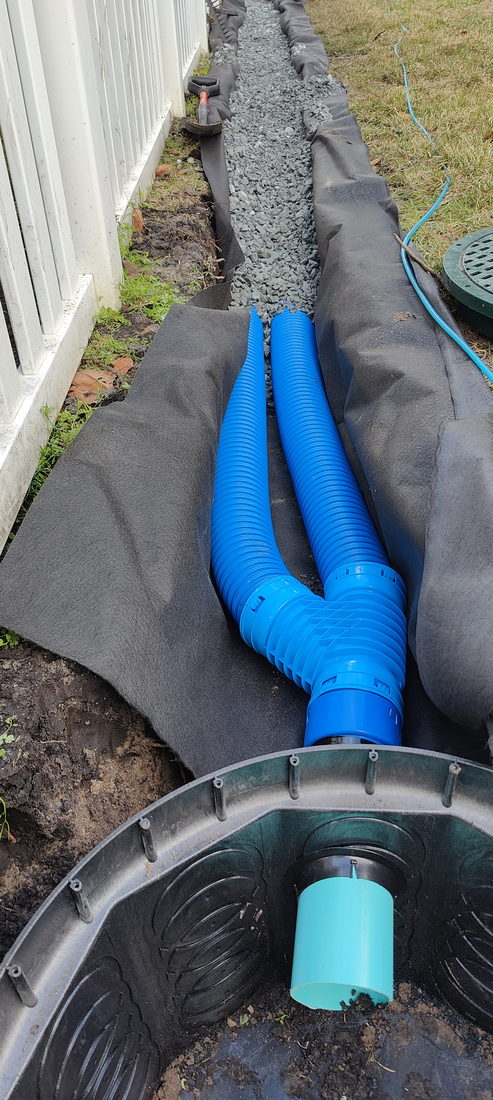
Two four-inch perforated pipes go in side by side, bedded in clean #57 granite. Two pipes is our minimum standard: they carry more water than one, so the drain keeps up when the rain comes hard.
Keep downspout water separate
Roof water carries shingle grit and moves in big surges, so we run it through its own solid SDR-35 line instead of dumping it into the stone. The perforated line stays clear and keeps doing its real job, pulling water out of the ground.
Cap it and send water to daylight
We close the fabric over the top, finish with sod or stone, and end the line at a discharge outlet or a high-flow outlet basin, somewhere the water leaves the property. We do not rely on a pop-up emitter, which restricts the flow and clogs.
Commercial-Grade Materials, Not a Big-Box Kit
A lot of French drains around Tampa Bay go in with weed barrier, limestone, and a single thin pipe. They drain for a season, then the fabric seals up, the stone packs with silt, and the water comes back.
Trufam builds with the materials that hold up in Florida ground. Each one is chosen for a reason, and together they are why the system keeps draining storm after storm.
Double-punch drainage fabric that lets water through and keeps soil out. Never weed barrier, which seals up and stops the drain.
Free-draining three-quarter-inch stone that holds its shape underground, instead of cheap limestone, which breaks down and packs tight over time.
A side-by-side pair carries far more water than a single line, so the drain keeps up with a hard Florida downpour.
Roof runoff runs in its own pipe so its grit and surge never load up the French drain.
Built Like Drainage, Sized for Tampa Bay Storms
We design a French drain around your property, not off a one-size kit. We read where the water comes from, how much there is, and where it can safely go, then size the trench and the pipe to match.
We are not the lowest bid, and we do not aim to be. You are paying for commercial-grade materials, two pipes instead of one, and a system that can actually be maintained. It costs more than a quick patch, and it protects a far bigger investment, your home.
A French drain is often one piece of a bigger water plan. We tie it in cleanly with underground drainage for roof and surface water, a channel drain where water runs off a driveway or pool deck, and foundation drains when water is reaching the house.
What You Get With Trufam
- A system designed and sized to your yard
- DOT-grade drainage fabric, never weed barrier
- Clean #57 granite, never cheap limestone
- Two perforated pipes for real capacity
- Excavated dirt hauled away, not reused
- A controlled discharge, not a pop-up emitter
French Drain, Channel Drain, or Underground Drainage?
If you do not work in drainage every day, it is natural to call every buried drain a French drain. They solve different problems though, and many Tampa Bay properties need more than one working together.
French drain
Pulls water that has soaked into the ground and has nowhere to go, using perforated pipe in a granite and fabric trench.
Best for: soggy lawns, standing water, and high groundwater.
Channel drain
Catches water sheeting across a hard surface, like a driveway or pool deck, right at the edge before it reaches the house.
Best for: hard surfaces that pool. See channel drains.
Underground drainage
The full system that ties French drains, surface drains, and downspouts together and moves all of it to one controlled discharge.
Best for: whole-property water problems. See underground drainage.
What Shapes the Scope and the Price
No two French drains are the same job. We price around how much water there is, how long the run has to be, and how far it has to travel to a safe discharge. During the walkthrough we read all of it and tell you exactly what we would build and why.
Premium drainage built to last is an investment, not a quick fix, and we price it that way. The walkthrough is where we confirm the scope before any number is set.
- Length and depth of the trench run
- How wet the ground is and how high the water table sits
- How far the line runs to a safe discharge
- Sod or stone finish on top
- Downspout tie-ins and any surface drains
- Access points for long-term maintenance
French Drain Projects in Tampa Bay
Why French Drains Matter on Florida Lots
Tampa Bay lots are flat, the water table sits high, and the rain comes hard and fast in the summer. Sandy topsoil drains quickly until it hits a layer of clay, and then the water stops and pools. That is the exact situation a French drain is made for: it gives trapped groundwater a path out before it sits against your lawn, your landscaping, or your foundation.
We install French drains across Palm Harbor, Clearwater, Dunedin, Safety Harbor, St. Petersburg, Seminole, Tampa, Fish Hawk, Bradenton, Lakewood Ranch, Sarasota, and the surrounding communities. See every area we cover on our service areas page.