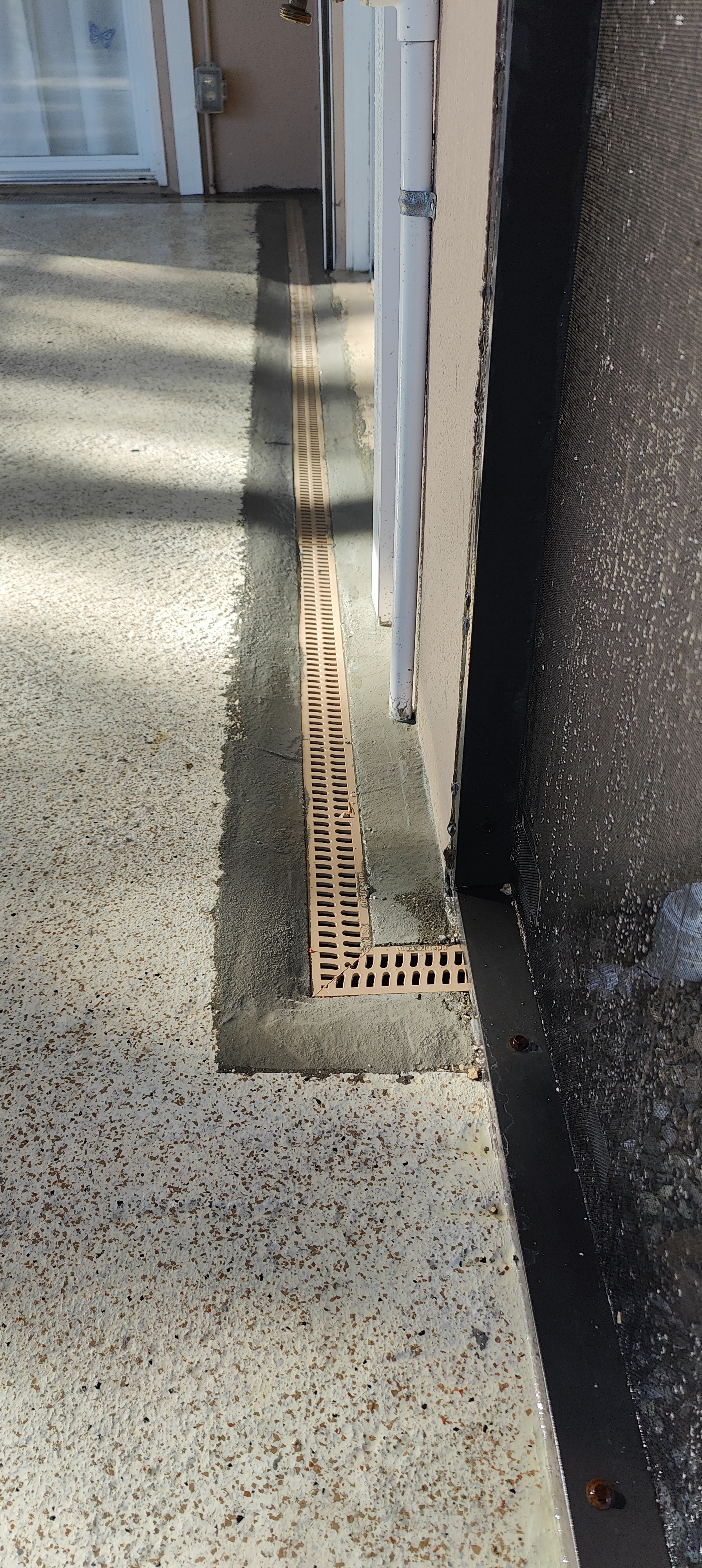
Channel Drains for Driveways, Pool Decks, and Patios
When rain hits a driveway, pool deck, or patio, it runs across the surface fast and collects wherever the slope sends it. A channel drain is a long, narrow grated drain set flush with the surface. It catches that water at the edge, drops it into a sealed underground line, and carries it to a safe discharge away from your home. Some homeowners call it a deco drain or a trench drain. The job is the same: stop surface water before it reaches the house.
Trufam builds a channel drain as the entry point to a full drainage system: sized, sealed, and serviceable so it still works years down the road. We are not the cheapest drainage company in Tampa Bay, and most homeowners who call us are done paying for quick fixes that did not last.
Hard Surfaces Move Water Fast
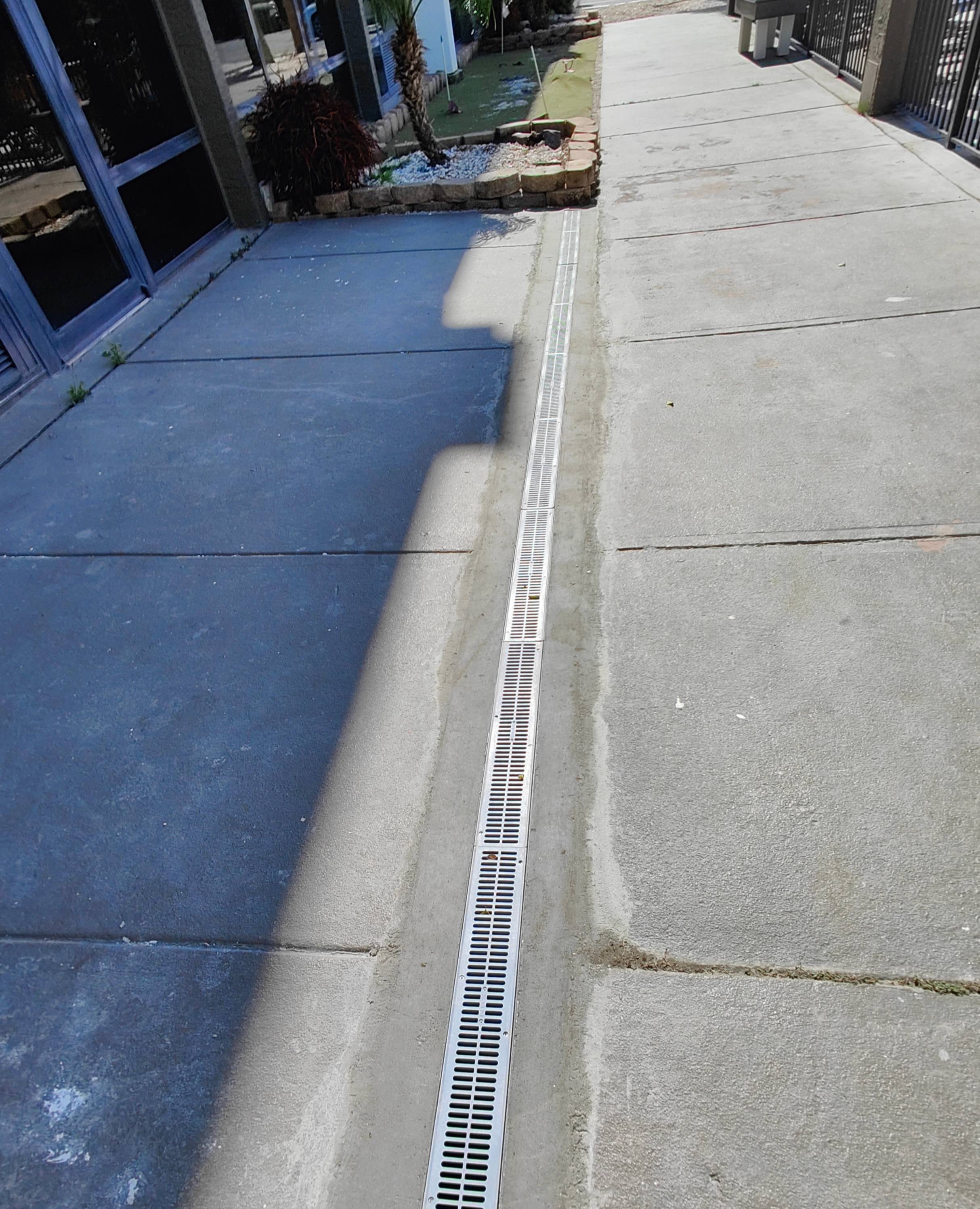
A driveway, pool deck, or patio cannot soak up rain the way a lawn can. The water runs across the surface and collects wherever the slope sends it. In Tampa Bay that usually means into the garage, across the patio toward the back slider, or down the side yard where it cuts an erosion line.
A channel drain is a long, narrow grated drain set flush with the hard surface. The grate catches the water at the edge, the channel underneath collects it, and a sealed outlet line carries it to a controlled discharge.
Built right, it sits flush and quietly carries water away for years. The part that decides whether it lasts is below the grate: how the line is sized, how it is sealed, and whether it can be cleaned.
When You Need a Channel Drain
- Driveway runoff sheeting into the garage
- Pool deck water crossing toward the house
- Patio that pools every time it rains
- Hard surface meeting a sloped lawn
- Garage threshold that floods in heavy rain
- Side yard erosion at the driveway edge
- Pool deck draining into the landscaping
- Two slabs meeting at different grades
A Channel Drain Is One Piece of a System
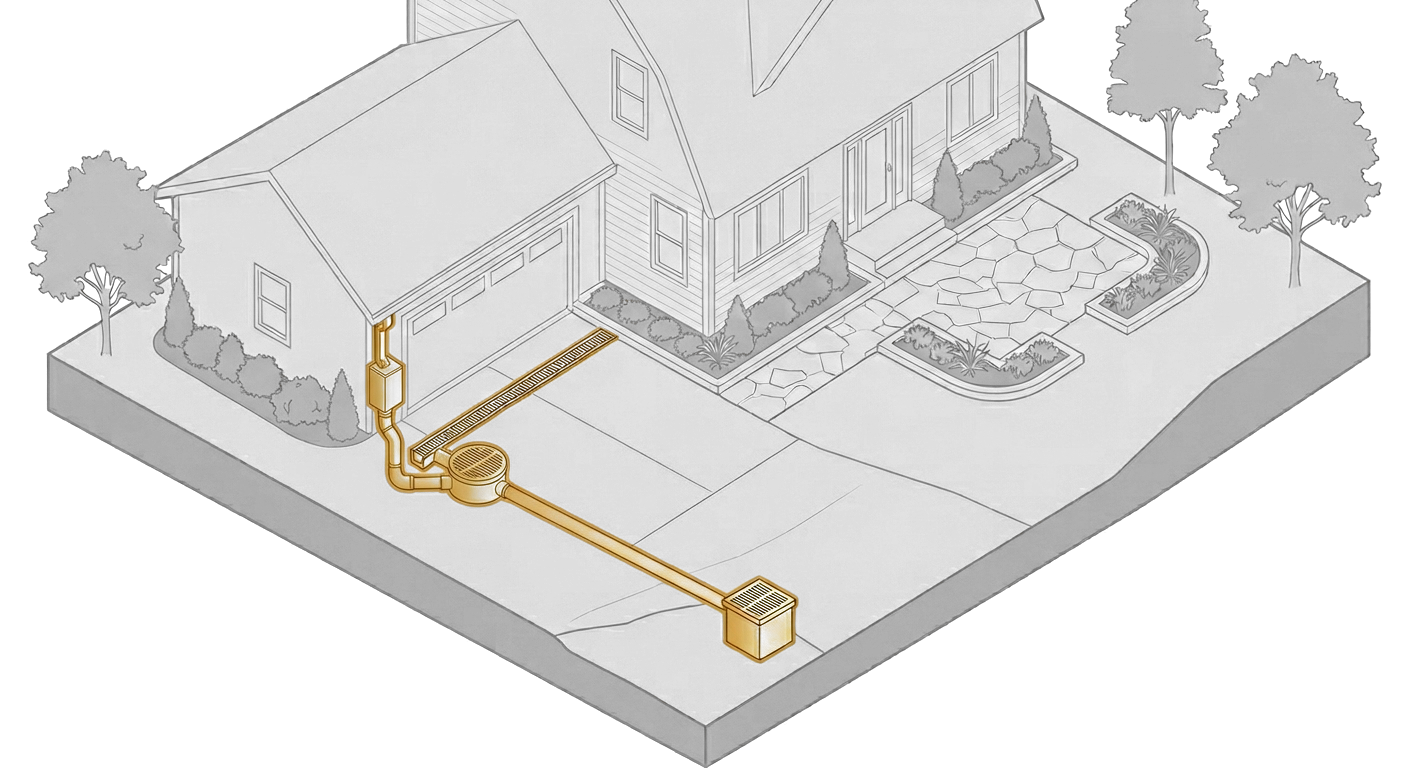
A channel drain only works if everything downstream of the grate is built to carry the water away and stay serviceable. Here is the full path on a real Tampa Bay property, from the surface to the discharge.
 1
2
3
4
5
1
2
3
4
5
Built to Drain Dry, Year After Year
A channel drain is more than a grate set in concrete. The channel under the grate, the sealed line, the sediment basin, the discharge, and the access points are what keep it working years after the install.
Read the slope before we cut
Most surface water problems are slope problems. Before any saw blade touches the concrete, we read the existing grade with a level, find where the water actually wants to go, and place the channel so it intercepts the full flow.
Set the grate flush
We set the grate level with the surface. A grate that sits proud of the concrete is a trip hazard and catches mower wheels, so it never goes in high. Flush is also how the channel reads as a clean line and disappears into the driveway or deck when it is dry.
Tie into SDR-35 pipe
The channel ties directly into solid SDR-35 PVC, a heavier wall than corrugated, and that is what we run under any pavers or concrete. It takes the load without crushing, and the joints stay sealed instead of separating over time.
Add a sediment basin
Hard surfaces shed sand, dirt, and shingle grit every storm. We set a sediment basin between the channel and the main line so the grit settles in one easy-to-reach spot, instead of working its way into the long underground run.
Discharge where it holds up
The line ends at a discharge outlet or a high-flow outlet basin sized to the surface feeding it. It has to move the full volume the channel carries during a hard Florida downpour and let it out somewhere it will not wash back.
Restore the surface
We close the job back up clean. Saw cuts in concrete get patched, pavers go back in around the grate, and pool deck finishes get matched, so the channel looks like it belongs in the surface when we leave.
We Match the Grate to How the Surface Is Used
A pool deck, a driveway, and a patio carry different loads and get used in different ways. We pick the grate style, the channel width, and the finish around how the surface is actually used, then size the channel to the water it has to move.
Plastic grates work great for foot traffic on patios, walkways, and pool decks, and we use them all the time. When a driveway or another surface takes vehicle weight, we step up to a metal grate with the load rating that traffic needs. The grate gets chosen for the load and the look, and the channel gets sized for a Tampa Bay storm.
A clean linear look for patios and walkways where the traffic is foot traffic and the look matters.
Narrow, safe openings for bare feet and chair legs, so the deck stays comfortable and the drain stays hidden.
Heavier steel or cast grates where vehicles cross, so the channel takes the weight without flexing or cracking.
Black, gray, sand, bronze, and stainless options so the grate blends with pavers, concrete, or stone.
Built Like Drainage, Sized for Tampa Bay Storms
A lot of channel drains around Tampa Bay go in as a kit: a grate dropped in concrete with no outlet sizing, no sediment capture, and no way to clean it. They look fine the week they go in, then back up the first time the grit has nowhere to settle.
Trufam builds a channel drain as the entry point to a real drainage system. We design the whole path, from the grate to the discharge, and build it to be cleaned and serviced for years.
We are not the lowest bid, and we do not aim to be. You are paying for commercial-grade materials, a system sized to the water it actually has to move, and the access points that keep it working. It costs more than a quick patch, and it protects a far bigger investment, your home.
When the channel is part of a bigger water plan for your property, we tie it in cleanly. See French drains for groundwater capture, yard drainage for the full picture, and foundation drains when water is reaching the house.
Materials We Use
- Grates sized to the flow and the traffic load, plastic or metal
- SDR-35 solid PVC line, heavier wall than corrugated
- Downspout cleanouts that tie roof runoff into the system
- A sediment basin ahead of the main line
- Cleanout access points for easy maintenance
- A discharge outlet or high-flow outlet basin
Channel Drain, French Drain, or Yard Drainage?
Homeowners call almost every drain a French drain, but they solve different problems, and many Tampa Bay properties need more than one working together.
Channel drain
Catches water sheeting across a hard surface, like a driveway, pool deck, or patio, right at the edge before it reaches the house.
Best for: hard surfaces and low spots that pool.
French drain
Captures water that has soaked into the ground and has nowhere to go, using perforated pipe in a gravel and fabric trench.
Best for: soggy lawns and high groundwater. See French drains.
Yard drainage
The full system that ties surface drains, downspouts, and underground lines together and moves all of it to one controlled discharge.
Best for: whole-property water problems. See yard drainage.
What Shapes the Scope and the Price
No two channel drains are the same job. We price around the surface, the water, and how far it has to travel to a safe discharge. During the walkthrough we read all of it and tell you exactly what we would build and why.
Premium drainage built to last is an investment, not a quick fix, and we price it that way. Most channel drain installs run one to two days. The walkthrough is where we confirm the scope before any number is set.
- Length of the channel run and number of channels
- Grate style and load rating for the surface
- Surface type: concrete, pavers, or pool deck
- How far the line runs to a safe discharge
- Sediment basin and cleanout access points
- Surface restoration and finish matching
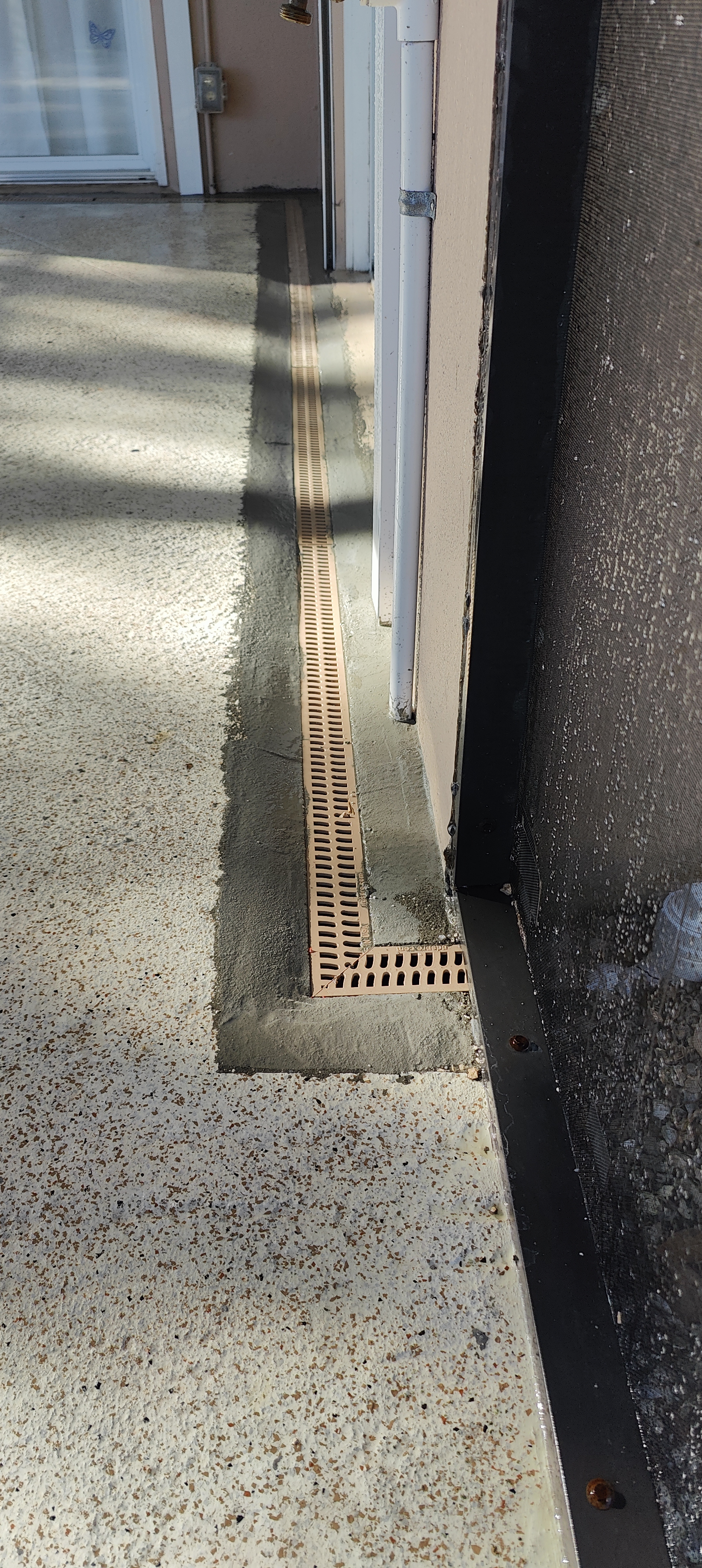
Channel Drain Projects in Tampa Bay
Why Channel Drains Matter on Florida Lots
Tampa Bay lots are flat, the rain comes hard and fast, and homes here sit surrounded by hard surfaces: screened pool cages, paver patios, and wide driveways. That is the exact situation a channel drain is made for. With flat grade, the water has nowhere to run, so it pools against the slab and finds the door.
We install channel drains across Palm Harbor, Clearwater, Dunedin, Safety Harbor, St. Petersburg, Seminole, Tampa, Fish Hawk, Bradenton, Lakewood Ranch, Sarasota, and the surrounding communities. See every area we cover on our service areas page.
Channel Drain FAQs